You do not need a weight bench or a dedicated workout room to build upper body strength. A clear patch of floor, a stable kitchen counter and a little resistance can take you far. The key is to train more than your arms: an effective upper body workout at home includes pushing for the chest and triceps, pulling for the back and biceps, and controlled shoulder work.
This routine fits into a bedroom or living room and works with bodyweight, dumbbells or resistance bands. Choose the version that matches what you have rather than postponing your workout until you own more equipment.
Set Up a Small, Safe Training Space
Clear enough room to extend your arms and lie down without hitting furniture. Use a nonslip surface and make sure any counter used for incline push-ups is sturdy. Avoid attaching resistance bands to doors or furniture unless an appropriate anchor is securely installed.
Dumbbells are convenient but optional. A securely closed backpack containing a few books can work for rows; check its stitching and handles first. Pulling movements are harder to train well without some form of resistance, so a band is a useful addition to an otherwise bodyweight routine.
Warm Up Before You Start
Spend three to five minutes preparing your shoulders and elbows. March in place, circle your arms gently, draw your shoulder blades together and apart, then try several slow wall push-ups. Begin with an easier variation. You should feel ready to move, not exhausted before the workout begins.
Your Simple Upper Body Workout at Home
Complete these upper body exercises at home in order. Beginners can start with one or two sets per movement, building toward two or three. Rest around 60 to 90 seconds between sets, or longer when necessary. Finish while you could still perform roughly one to three controlled repetitions.
1. Incline or Floor Push-Ups
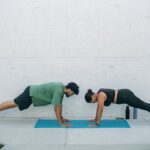
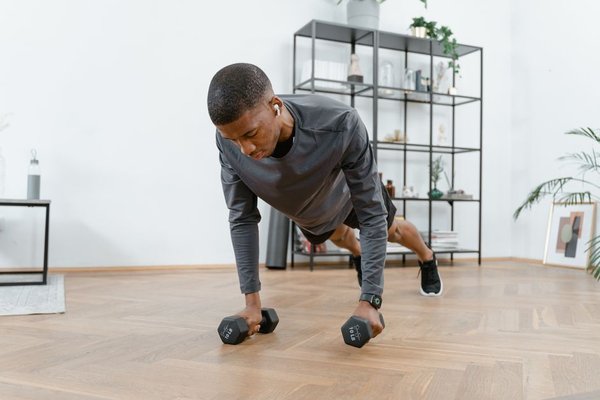
Do 6 to 12 repetitions. Place your hands on a sturdy counter for an easier option, or on the floor for more challenge. Keep your body straight, bend your elbows comfortably and lower your chest toward your hands. Push back up without letting your hips sag. This trains the chest, front shoulders and triceps. A higher hand position makes the exercise easier.
2. One-Arm Dumbbell or Backpack Rows
Do 8 to 12 repetitions per side. Hinge at the hips with your back neutral and support your free hand on a stable surface if needed. Pull the weight toward your hip rather than shrugging it toward your ear. Lower slowly and avoid twisting your torso. Rows balance pushing work by training the upper back and encouraging shoulder-blade control.
3. Standing Shoulder Press
Do 8 to 12 repetitions with light dumbbells or water bottles. Start with your hands near shoulder height and press upward through a comfortable, pain-free range. Keep your ribs from flaring and your neck relaxed. If overhead motion bothers your shoulders, skip it. A good shoulder workout at home should challenge you without forcing painful positions.
4. Bent-Over Reverse Fly
Do 10 to 15 slow repetitions using very light weights, or none while learning. Hinge forward slightly, soften your elbows and open your arms to the sides. Move through the shoulders instead of swinging your hands. This targets the rear shoulders and upper back, areas easily overlooked when home routines focus on push-ups.
5. Biceps Curls
Do 10 to 15 repetitions. Hold dumbbells, water bottles or a resistance band secured beneath both feet. With elbows near your sides, bend your arms without rocking your torso. Lower slowly. Curls are useful in a home arm workout, but rows already involve your biceps, so more curls are not automatically better.
6. Lying Triceps Extensions
Do 8 to 12 repetitions with light dumbbells or one weight held securely in both hands. Lie on the floor, point your upper arms upward and bend your elbows to lower the weight gradually toward a comfortable position behind your head. Straighten your elbows without snapping them locked. Start light: this should feel steady, not painful.
Adapt the Workout to Your Equipment
No dumbbells? Keep the incline push-ups and use a securely held backpack for rows. For curls, a resistance band under your feet works if it is undamaged and cannot slip. A band can also provide seated rowing resistance with its midpoint secured around your feet; maintain control so it cannot snap back.
If you only have floor space, begin with wall or floor push-ups and unweighted shoulder drills. That builds a habit, but add a safe pulling option for a more complete program. A beginner dumbbell workout, resistance band exercise guide and bodyweight strength routine are natural next steps as your setup changes.
How Often Should You Train and Progress?
Try this workout twice weekly on nonconsecutive days, such as Monday and Thursday, while making time for legs and core. Public health guidance recommends muscle-strengthening activity for all major muscle groups on at least two days each week. You do not need to train every muscle to exhaustion.
Record the exercise variation, resistance and repetitions. When you reach the top of the range with good control across sets, increase resistance slightly or choose a harder variation. For instance, counter push-ups can progress to a lower, stable surface before floor push-ups. Change one variable at a time.
Mild muscle soreness may occur, but sharp pain, dizziness or unusual breathlessness means stop. If you are recovering from injury or managing a condition that affects exercise, seek individualized guidance from a qualified healthcare professional.
Frequently Asked Questions
Can I build upper body muscle without a gym?
Yes. Muscles respond to appropriately challenging resistance, not the location. Bodyweight exercises, bands and dumbbells can build strength and muscle when you train consistently and progressively increase the challenge.
How long should a home upper body session take?
Allow roughly 25 to 40 minutes for warming up, six exercises and rests. Your first sessions may be shorter if you do one set per movement. Good form matters more than rushing.
Is it okay to train my upper body every day?
Light mobility work can be done regularly, but challenging resistance training benefits from recovery. Starting with two nonconsecutive upper-body sessions is practical, particularly for beginners.
What if I cannot do a full push-up?
Use a wall or sturdy countertop and practise controlled repetitions. As your strength improves, gradually lower the height of your hands. This develops pushing strength while keeping your body position stable.
Build Strength With the Space You Have
A balanced home session needs neither complicated equipment nor dozens of exercises. Give your chest, back, shoulders and arms a clear job, leave time for recovery and record small improvements. Progress comes from repeatable, well-controlled effort—not from turning your living room into a gym.