
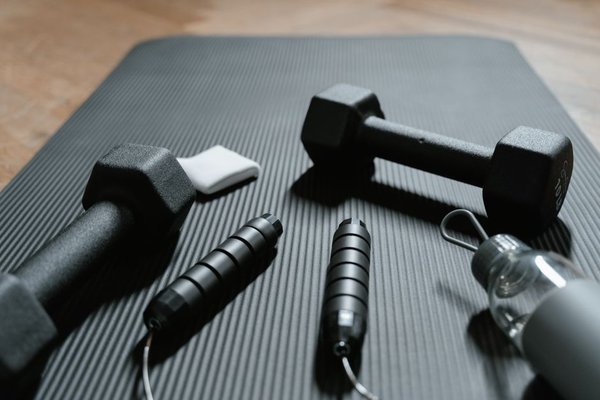
A treadmill is convenient, not essential. You can do an effective cardio workout at home in the floor space beside a bed or sofa, without a machine, an expensive membership, or complicated moves. The secret is sustained movement at an intensity that makes you breathe faster.
If you share walls with neighbours or cannot get outdoors, low-impact exercises are a particularly practical choice. They can raise your pulse without jumping, stomping, or needing a long stretch of floor.
Set Up Your Space Before You Start
Clear enough room to step sideways and move your arms freely. Remove loose rugs and clutter, check that the floor is not slippery, and keep drinking water nearby. Supportive shoes may help if you are exercising on a hard surface. A wall or sturdy chair can assist with balance, although you do not need equipment to complete the workout.
Remember that cardio depends on effort, not distance. Rapid turns in a small room can be awkward; controlled steps, active arms, and a steady rhythm are usually more useful.
Six Home Cardio Exercises That Need No Machines
Brisk Marching in Place
Stand upright, lift your feet clearly, and swing your arms naturally. Begin slowly, then gradually move faster. Marching is an easy warm-up, and it also works as an active recovery between harder movements.
Step Jacks
Step your right foot sideways while raising your arms, return to the middle, then repeat on the left. These are jumping jacks without the jump. Narrower steps suit tight rooms, while more energetic arm movements increase the effort.
Quick Side Steps
Step right and bring your other foot in, then travel left. Keep your knees soft and your steps short. One step each way is enough. Avoid dragging your feet or rushing into furniture.
Alternating Knee Drives
Lift one knee toward your waist while bringing the opposite elbow downward. Switch sides in a controlled rhythm. Keep your chest lifted, and make the knee lift smaller if your balance or hip mobility is limited.
Alternating Back Steps
Step one foot a short distance backward, return it, and alternate legs. Reach your arms forward as you move. You are not performing a deep lunge; the goal is continuous, comfortable motion with steady breathing.
Standing Shadow Boxing
Keep your knees relaxed and alternate light punches straight ahead. Rotate your upper body gently, avoid locking your elbows, and stay in one spot. Even without jumping, a brisk sequence of punches can feel demanding.
Try This 20-Minute Indoor Cardio Workout
This simple no equipment cardio routine fits into a small room. Use a timer and keep your pace manageable, especially during your first session.
Begin with four minutes of gentle marching, shoulder rolls, and easy side steps. For the main circuit, perform each of the six exercises above for 40 seconds, then march slowly or rest for 20 seconds. Each movement occupies one minute, so the circuit lasts six minutes. Repeat it twice for 12 minutes of interval training.
Finish with four minutes of increasingly slow marching to let your breathing settle. The total is 20 minutes. For an easier version, work for 20 seconds and recover for 40 seconds at each station. You will still follow the same routine and duration.
Here is a useful apartment adjustment: if fast steps make the floor noisy, soften your foot placement and increase your arm swing instead. A quiet workout can still challenge you; there is no requirement to jump.
Use Your Breathing to Set the Intensity
The talk test helps you gauge your effort without a watch. During moderate-intensity exercise, you should breathe faster but still manage a conversation. Vigorous effort generally makes it difficult to say more than a few words without pausing for breath. The same movement may feel easy to one person and hard to another.
Beginners can focus on moderate effort and smooth technique. Slow down or extend your recovery if your movements become uncontrolled. Stop if you experience chest pain, faintness, unusual breathlessness, or severe discomfort. If you have a heart condition or another health issue that affects exercise, ask a healthcare professional about appropriate activity before increasing intensity.
How to Progress Without Buying Equipment
Start with two or three sessions per week and leave room for recovery. When the routine becomes more comfortable, increase your marching speed, extend the work intervals, or add a session. Changing one thing at a time makes progress easier to assess. Try recording how comfortably you complete the circuit rather than chasing calorie estimates.
The US Centers for Disease Control and Prevention recommends that adults aim for at least 150 minutes of moderate-intensity aerobic activity each week, or 75 minutes of vigorous activity, or an equivalent combination. Adults should also include muscle-strengthening activities on two days weekly. You can accumulate your aerobic minutes across shorter sessions rather than doing them all at once.
Combining home cardio exercises with outdoor walks and beginner strength training at home gives your week more variety. A weekly workout schedule can help you stay consistent, even if individual sessions are short.
Avoid These Small-Space Workout Mistakes
You do not need advanced jumping drills to improve cardiovascular fitness. Trying to move too quickly in cramped surroundings can affect balance and technique. Warm up gradually, avoid holding your breath, and finish at a slower pace rather than stopping abruptly. If a movement hurts, choose an easier variation instead of forcing it.
Frequently Asked Questions
Can you improve cardiovascular fitness without equipment?
Yes. Consistent moderate- or vigorous-intensity activities such as brisk marching, step jacks, and knee drives can train your cardiovascular system without exercise machines.
Is ten minutes of cardio at home enough?
Ten minutes is worthwhile and can contribute to your weekly activity total. It is a sensible starting point if longer workouts feel overwhelming.
Do home cardio workouts need jumping?
No. Low-impact moves can be challenging when performed at a suitable pace. Jumping is optional, not a requirement for effective cardio.
How often should a beginner do indoor cardio?
Two or three manageable sessions a week can be a practical beginning. Increase your activity gradually according to your fitness, health, and recovery.
Make the Routine Easy to Repeat
The best cardio workout at home is one that fits your space and your ability. Start with a few controlled movements, monitor your breathing, and progress gradually. You can build stamina without a machine, a large room, or a noisy workout.